
Editor's Note: Krazy Ken the Farmers Friend passed away in 2021, but his knowledge and passion for helping farmers lives on. This is an oldie but a goodie from Krazy Ken, sharing the expertise he built over decades of working with agricultural equipment.
Krazy Ken the Farmers Friend here! In the video above, I walk you through all the different sizes of steel detachable chain that Farmchains.com carries and has in stock, along with the various attachments available. I'll also demonstrate how to break apart detachable chain using our steel detachable chain breaker tool. Whether you're working on planters, hay elevators, manure spreaders, or hard-to-find drive chains, this guide covers everything you need to know.
What is Steel Detachable Chain?
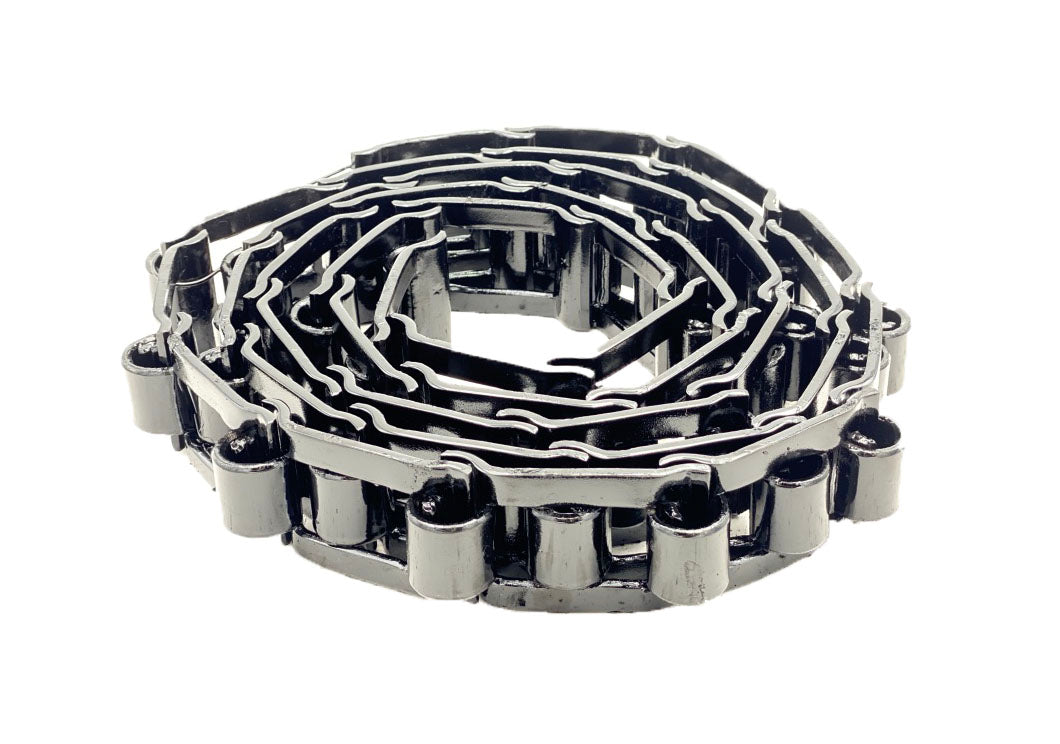
Steel detachable chain is a heavy-duty conveyor chain designed for moving bulk materials in agricultural and industrial applications. Unlike roller chain that uses pins and bushings, detachable chain uses interlocking links that can be taken apart and reassembled without removing pins. This makes it perfect for applications where you need to adjust length, make repairs, or replace worn sections.
The "detachable" name comes from the fact that each link can be separated from the next by bending and aligning the links properly. This design makes installation, maintenance, and repairs much easier than welded or permanently assembled chains.
Steel Detachable Chain Sizes We Stock at Farmchains.com
We carry a comprehensive range of steel detachable chain sizes for various agricultural applications. Here's what we have in stock:
25, 32, and 32W Chain - Planters and Seeders
These lighter-duty chains are commonly used on:
- Planter drive systems
- Seeder mechanisms
- Light conveyor applications
55 and 62 Chain - Hay Elevators, Conveyors, and Firewood
Medium-duty chains perfect for:
- Hay elevators
- General conveyors
- Firewood conveyors
- Feed handling equipment
- Don't forget the coupler's
67H, 67XH, and S Chain - Manure Spreader Aprons
The workhorses of manure spreader applications:
- 67H - Heavy-duty standard for most manure spreader aprons
- 67XH - Extra-heavy duty for larger spreaders and demanding conditions
- S Class - Heavy-duty option for large commercial spreaders
These are the most common chains for manure spreader aprons, with 67H and S being the go-to choices.
70, 72, and 72-1/2 Chain - Hard-to-Find Drive Chains
These are specialty sizes that are very hard to find elsewhere. Used for:
- Drive chain applications
- Older equipment that requires these specific sizes
- Custom agricultural machinery
If you need 70, 72, or 72-1/2 chain, we're one of the few suppliers that stocks them!
67W Chain - Chopper Corn Head Gathering Chains
Specialized chain used on:
- Old chopper corn heads
- Gathering chain applications
- Vintage harvesting equipment
Common Agricultural Applications by Chain Size
Here's a quick reference guide for which chain to use:
| Chain Size | Common Applications |
|---|---|
| 25, 32, 32W | Planters, seeders |
| 55, 62 | Hay elevators, conveyors, firewood conveyors |
| 67H, 67XH, S | Manure spreader aprons |
| 70, 72, 72-1/2 | Drive chains (hard to find) |
| 67W | Old chopper corn head gathering chains |
Understanding Chain Attachments
Attachments are what make detachable chain so versatile. They allow you to mount slats, bars, flights, or buckets to move material:
Common Attachment Types
Most detachable chain attachments are designated as ASL (left hand) or ASR (right hand), which indicates which side of the chain the attachment tab extends from:
- ASL-attachments - Extended tabs on the left side for mounting slats (L = Left hand)
- ASR-attachments - Extended tabs on the right side for mounting slats (R = Right hand)
Attachment Spacing
Attachments can be spaced at regular intervals along the chain. Common patterns include:
- Every link (continuous)
- Every other link
- Every third, fourth, or fifth link
- Custom spacing for specific applications
How to Break Apart Steel Detachable Chain
In the video above, I demonstrate using our steel detachable chain breaker tool - the easiest and safest way to take apart detachable chain. You can also do it manually. Here's the proper technique:
Using a Steel Detachable Chain Breaker (Recommended)
A chain breaker tool makes the job quick, safe, and easy. Watch the video to see how I use it to cleanly separate chain links without damaging the chain or risking injury.
Manual Method - How It Actually Works
Important: Steel detachable chain does NOT use pins like roller chain. The links interlock and are separated by bending and aligning.
Tools You'll Need:
- Hammer
- Safety glasses (always!)
- Work gloves
- Flat work surface
- Angle grinder (optional, for tight links)
Step-by-Step Process:
Step 1: Bend the Link
Bend one link up at approximately a 45-degree angle to the rest of the chain. This starts to disengage the interlocking connection.
Step 2: Line Up with the Opening
Once bent, line up the link with the opening in the adjacent link. The bent link should align with the gap that allows it to slide free.
Step 3: Pound with a Hammer
Using your hammer, strike the link to drive it through the opening and separate it from the chain. Keep your strikes controlled and watch your fingers.
Step 4: For Tight Links (Optional)
Some guys will take an angle grinder to open up the opening a little more if the links are really tight or worn. This makes separation easier but should only be done if necessary.
Important Safety Tips
- Always wear safety glasses - Metal can fly when struck
- Work on a stable surface - Don't try to do this with the chain hanging
- Watch your fingers - Keep hands clear of the strike zone
- Be patient - Tight links may take several attempts
- Consider a chain breaker tool - Much safer and easier than manual methods
- Use angle grinder carefully - Only if absolutely necessary and with proper safety equipment
Reassembling the Chain
To put the chain back together, reverse the process:
- Bend the link at a 45-degree angle
- Line it up with the opening in the adjacent link
- Slide it into position
- Bend it back flat and pound it into place with your hammer
- Make sure the link is fully seated and secure
Choosing the Right Chain for Your Application
Here's what to consider when selecting steel detachable chain:
Match Chain Size to Application
Use the guide above to select the appropriate chain size for your equipment. If you're unsure, give us a call - we can help identify what you need based on your equipment make and model.
Load Capacity
Don't undersize your chain. It's better to go one class heavier than you think you need, especially for manure spreader aprons and heavy-duty applications.
Operating Conditions
Consider:
- Abrasive materials (manure, grain, etc.)
- Corrosive environments
- Operating temperature
- Frequency of use
Attachment Requirements
Determine what you need to mount to the chain and choose the appropriate attachment style (ASL or ASR) and spacing.
Length and Pitch
Measure your application carefully. You'll need to know:
- Total chain length required
- Pitch of existing chain (if replacing)
- Sprocket specifications
Maintenance Tips from Krazy Ken
After years of working with this stuff, here's my advice for keeping your detachable chain running:
Regular Inspection
- Check for worn or damaged links
- Look for links that are coming loose
- Inspect attachments for cracks or breaks
- Watch for excessive wear on sidebars and interlocking surfaces
Lubrication
While detachable chain doesn't need as much lubrication as roller chain, a light coating of oil on the bearing surfaces helps reduce wear and prevents rust.
Proper Tension
Keep the chain properly tensioned. Too loose and it will jump sprockets; too tight and it will wear prematurely.
Replace Worn Components
Don't wait until the chain breaks. Replace worn links, damaged attachments, and stretched sections before they fail in the field.
Common Problems and Solutions
Chain Keeps Breaking
Causes: Overloading, worn sprockets, misalignment, wrong chain class
Solution: Check load capacity, inspect and replace worn sprockets, verify alignment, upgrade to heavier chain if needed
Links Keep Coming Apart
Causes: Worn interlocking surfaces, improper installation, vibration
Solution: Replace worn links, ensure links are fully seated when assembling, check for excessive vibration
Excessive Wear
Causes: Abrasive materials, lack of lubrication, misalignment
Solution: Consider harder chain material, improve lubrication, check alignment
Why Buy from Farmchains.com?
We've been supplying steel detachable chain to farmers and equipment operators for over 17 years. Here's what sets us apart:
- Comprehensive Stock - We carry all the sizes shown in the video, from 25 to 72-1/2
- Hard-to-Find Sizes - We stock 70, 72, and 72-1/2 chain that others don't carry
- Expert Knowledge - Krazy Ken's legacy of expertise continues with our knowledgeable team
- Quality Products - USA-made options and premium imports
- Custom Solutions - We can build chain assemblies to your exact specs
- Fast Shipping - Get your parts when you need them
- 24/7 Support - Call us anytime for help
Need Help Selecting Chain?
Don't guess on something this important. Give us a call and we'll help you get exactly what you need:
Contact Farmchains.com:
- Phone: 815-973-2648 or 800-648-5429
- Text: 815-973-2648
- Email: info@farmchains.com
Whether you need a single replacement link, hard-to-find drive chain, or a complete custom chain assembly, we're here to help. That's the Farmchains.com promise!
- In memory of Krazy Ken the Farmers Friend (1943-2021)


